- Home
- About Us
- Domestic Tour
- Varanasi Tour
- Religious Tour
- Nepal Tour
- Char Dham
- Pind Daan
- Transport
- Blog
- Reach Us
- Home
- About Us
- Domestic Tour
- Varanasi Tour
- Religious Tour
- Nepal Tour
- Char Dham
- Pind Daan
- Transport
- Blog
- Reach Us
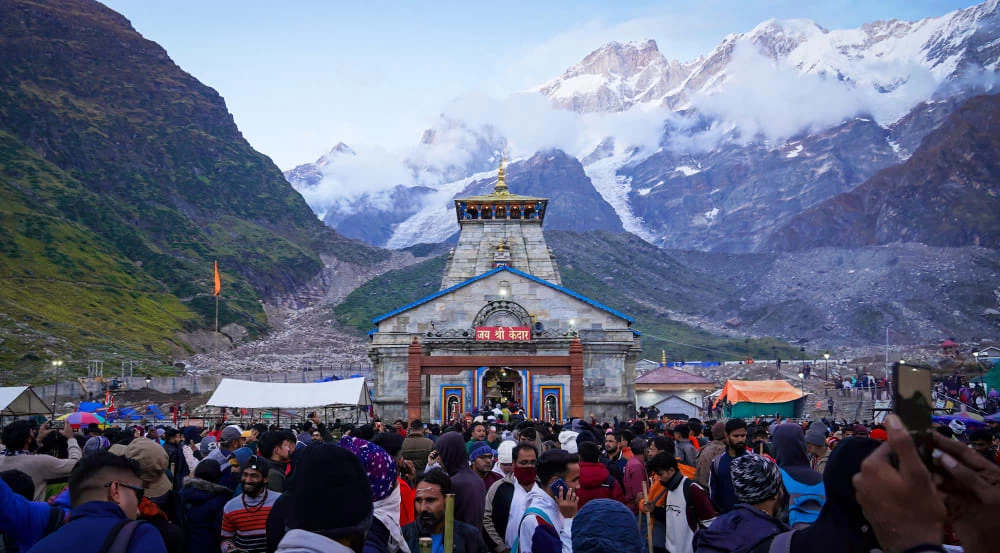
Planning the Char Dham Yatra in 2026? This journey in India takes you through the mountains of Uttarakhand to four important temples:
Yamunotri,
Gangotri,
Kedarnath, and
Badrinath Temple
This trip can teach you multiple things about India’s religion, places, history, culture, values, lifestyle and many more. But it is common to be worried about planning the tour. Why? Because there are many tour packages, different routes, and unclear itineraries, that make it hard to decide what’s right or what’s wrong. Here, you don’t have to worry as Balaji Travels is here to make your journey simple and well-organised.
Now, instead of spending hours trying to figure everything out, you can simply go through this blog to know about the best Char Dham tour packages with a complete travel plan and get a clear idea of how the entire thing works.
This blog aims to give you a clear understanding of the Char Dham Yatra, including a detailed itinerary, what tour packages offer, and how to choose the right option for a smooth and well-organised journey in 2026.
A complete day-by-day journey plan from Haridwar to all four dhams, so you know what to expect at every step
Clear explanation of travel flow, including treks, long drives, and important stopovers along the route
Details of what tour packages usually include, like stays, meals, transport, and driver support
Helpful insights to choose between different travel options, including road trips and faster alternatives
Practical guidance to plan your yatra smoothly, avoid confusion, and travel with better comfort and preparation
Detailed Char Dham Yatra Itinerary in 2026
What’s Included in Char Dham Tour Packages
Have You Planned Everything for Your Char Dham Yatra?
FAQ’s about Char Dham Yatra Tour
Your journey will start from Haridwar to reach Barkot, followed by a drive to Barkot via Mussoorie, with a short stop at Kempty Falls. The route takes around 7–8 hours (approx. 210 km). Breakfast is included, and once you arrive, you’ll check into your hotel for an overnight stay in Barkot.
Beginning early will help you set the pace for your first Dham visit. After breakfast (often packed), you will drive to Jankichatti or Phoolchatti, which serves as the base for the Yamunotri trek. A 5 km uphill journey starts here, either on foot, or with the assistance of a pony or palki.
Upon arrival, take the time to stop at the temple, and don’t forget the warm waters from Surya Kund just up the road. Darshan, you will trek down and come back to Barkot for a comfortable overnight stay.
After breakfast, the journey continues towards Uttarkashi, a calm town set along the Bhagirathi River. The drive is shorter today, giving you some time to relax once you arrive.
Later, you can visit the famous Kashi Vishwanath Temple. It’s a peaceful stop and a good way to ease into the next phase of your journey. Overnight stay will be in Uttarkashi.
The day begins early as you head towards Gangotri. On the way, many travellers stop at Gangnani to take a dip in the natural hot water spring.
As you move ahead, the route through Harsil Valley offers some truly beautiful views. Once at Gangotri, you can perform darshan and spend some quiet time by the river. By evening, you’ll return to Uttarkashi for rest.
Today you have a longer drive to Guptkashi. The road runs alongside the Mandakini River and you can enjoy beautiful view on the road.
Upon your arrival, you can visit Ardh Narishwar Temple and then proceed to your hotel for check-in. This halt is crucial as it gets you ready for the kedarnath leg of the yatra. There will be an overnight stay in Guptkashi.
This is one of the best days of the trip. After breakfast, proceed to Sonprayag and further on to Gaurikund (beginning of the Kedarnath trek).
From here you have two options, complete the trek walk or take a helicopter (if pre-booked). After arrival at Kedarnath, attend darshan and retire to your accommodation near the temple.
After your darshan in the morning, you will begin your journey back. You can choose to trek back down or to take a helicopter ride.
When you get to the base, they will drive you back to Guptkashi. The remaining part of the day is primarily for taking rest and getting back strength after the long trek.
Leaving Guptkashi behind, you’ll head towards Badrinath. After reaching, check into your hotel and prepare for darshan.
Many pilgrims take a dip in the Tapt Kund before visiting the temple. In the evening, you can attend the aarti. If time allows, nearby places like Mana Village and Vyas Gufa are worth exploring.
With the final dham completed, you’ll begin your return journey. After breakfast, drive towards Srinagar via Joshimath.
The route is scenic but more relaxed compared to earlier days. Upon arrival, check into your hotel and unwind for the night.
The journey completing, after breakfast you will drive back to Haridwar via Rishikesh. If you have time, you can stop for a short visit at places like Laxman Jhula and Ram Jhula. Toward the full day you will be dropped at your end point/finish point to the end of the line for your Char Dham Yatra.
If you are running out of time or need a more comfortable option, you may also go for the Char Dham Tour Package by Helicopter from Dehradun which takes you to all the four dhams in significantly less time.
You’ll be provided with hotel stays at each stop, such as Barkot, Uttarkashi, Guptkashi, and Badrinath. Rooms are generally clean and basic to comfortable, depending on the package you choose.
Most packages include breakfast (as seen in standard itineraries), and some may also offer dinner. On travel-heavy days, you might even get a packed breakfast to save time.
Your travel is taken care of from start to finish. This includes:
Pickup and drop (Haridwar/Delhi/Dehradun)
Private car, SUV, or tempo traveler
All intercity transfers and sightseeing
Driving in the hills is not easy. That’s why packages include skilled drivers who know the terrain well.
You’ll be dropped at key points like Jankichatti (for Yamunotri) and Sonprayag (for Kedarnath), so you don’t have to worry about figuring out local transport.
Along the way, you’ll also get to visit important spots like:
Kempty Falls
Harsil Valley
Mana Village
Rishikesh landmarks
At this point, you have witnessed the complete process of the journey, how the initial drive out of Haridwar to the last one back after Badrinath takes place. You will be able to see the full details and book your trip with Balaji Travels. We assist you in expertly designed itineraries, customised Char Dham Tour Packages with Itinerary, good transportation, quality accommodation, and full route direction. Whether it is on-time pickups or seamless transfers between one dham to the next, it is all done in a way that ensures that you travel with a sound mind and concentrate on your spiritual journey.
The temples usually start at the end of the month of April or early May (on Akshaya Tritiya) and end at around the month of October or November (around Diwali).
Optimal Months: September to October and May.
Avoid: The monsoon season (July to August) because it is the period of heavy rains that may lead to landslides and blockage of roads in the Himalayan region.
Yes. Every pilgrim is obliged to enrol in the Yatra through the official Uttarakhand Tourism portal. Also, since the altitudes are often high (particularly at Kedarnath and Yamunotri), a medical examination or a self-proclaimed fitness may be a prerequisite to check whether you can manage the low oxygen levels.
Any person can experience altitude sickness irrespective of age. To minimise risk:
Acclimatise: Take a day at Haridwar or Rishikesh, and then go on up.
Hydrate: Take lots of water and avoid caffeine or liquor.
Medication: Your doctor should advise you on taking preventive medication such as Acetazolamide.
Climb Slowly: Suspend breathing and take a break if you are feeling dizzy or breathless.
The Himalayas' weather is variable. Nights are even freezing in summer.
Fleece jackets, carry thermals and a heavy down jacket.
Remember to bring a good poncho or raincoat, because it might rain at any time.
Hike trekking shoes with good grip and ankle support to be used during the Yamunotri and Kedarnath hikes.
Haridwar/Uttarkashi: Good connectivity (4G/5G).
The Dhams: BSNL tends to be most widespread in rural locations. Jio and Airtel perform satisfactorily in most of the towns; however, they might break down when they are on the real treks or when they are on the temple shrines.
Tip: Do not follow the GPS when going up the mountain roads; follow your local driver.